
Between PSLE stress, after-school CCAs, and the constant balancing act of homework, screen time, and sleep, can sometimes feel like home is just another extension of school. But here’s a gentle reminder home has the potential to be something even more powerful, a safe space where our children can express their feelings freely and learn that it’s okay to stumble along the way.
In recent months, mental health has become a big focus in Singapore’s education conversations. Reports showed that more children are reaching out to helplines like Tinkle Friend for comfort and support, with stress and worries ranking among the top reasons for their calls (The Straits Times, 2024). MOE has also refreshed its “Parenting for Wellness” resources to equip us with practical tools and conversation starters that help families talk about stress, screen time, and setbacks more openly. These reminders are timely, because while our children’s schools are strengthening their social-emotional learning, parents play an equally important role in nurturing these skills at home.
So how do we do this without sounding like “lecturers at home”? It starts with shifting from the old “Tiger Parenting” approach into something gentler but still steady and clear. Instead of focusing only on results, we can celebrate efforts too. When your child stumbles on a test, rather than diving straight into tuition plans, try first with empathy: “I know this hurts. Let’s think of one small next step together, and maybe we can reward ourselves with ice cream.” Modelling how we handle failure shows them that mistakes aren’t the end of the world, but simply part of the learning journey.
Another way to nurture resilience is by weaving emotional check-ins into daily routines. Around the dinner table, a simple “What made you proud today?” or “What felt tough?” gives your child the language to name their emotions. A “gratitude jar” can also be fun: everyone in the family drops a note in weekly, and you read them together on Sundays. Small rituals like these build emotional vocabulary and help children see that both good and bad days belong in family life.
Of course, children learn most from what we model. Research from NUS highlights that when parents regulate their own emotions and respond calmly, children become more resilient. That means when the schedule goes offtrack, sometimes the best gift is simply taking a deep breath together. A little humour goes a long way too; laughing at our own everyday mistakes makes it easier for children to laugh at theirs.
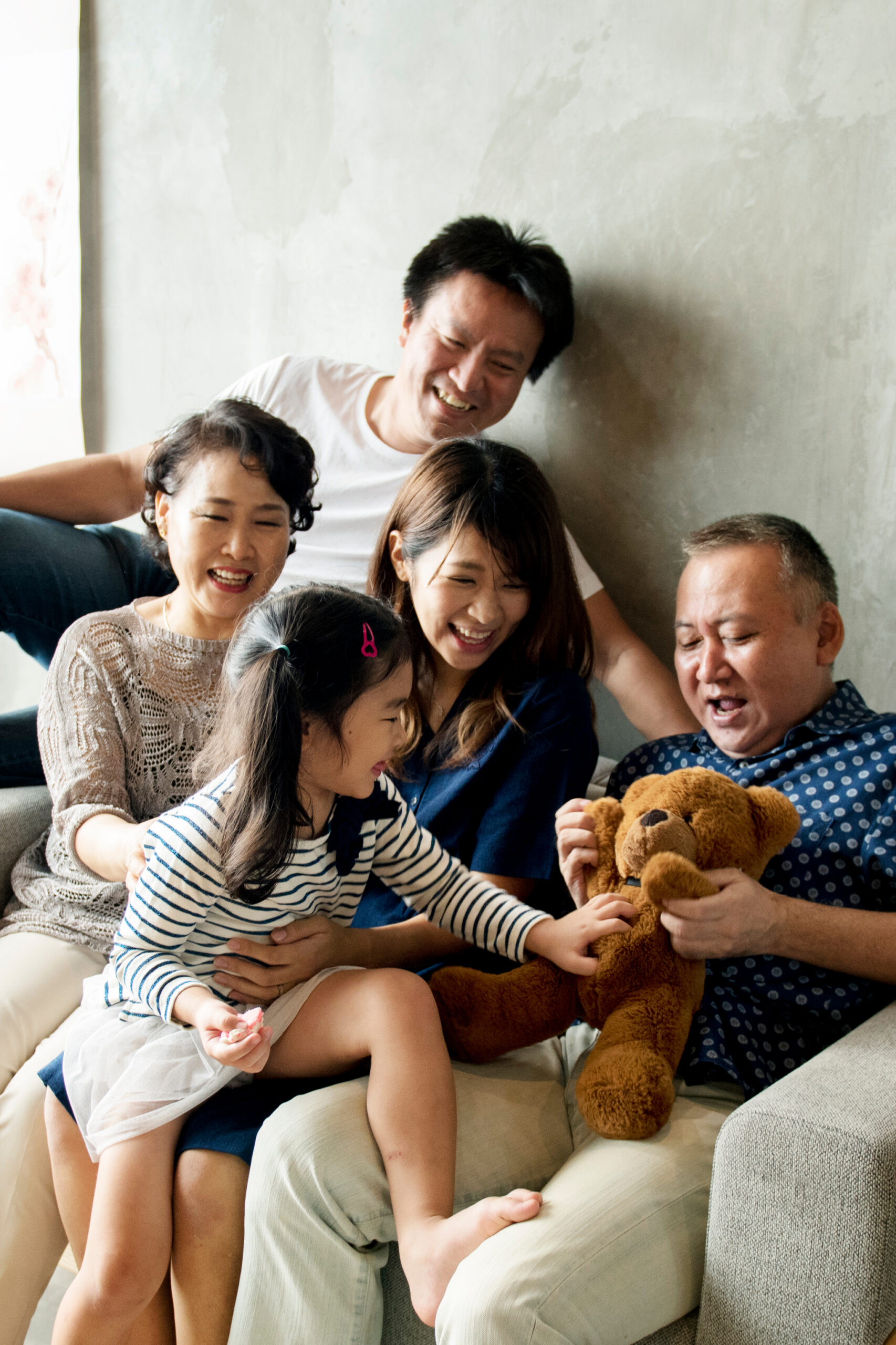
Finally, never underestimate the kampung spirit. Many of us grew up with grandparents, neighbours or trusted friends as part of our support system. Inviting Ah Ma to share her childhood “fail” stories, or setting up a cosy playgroup where children create art while parents share kopi and coping hacks, keeps that communal safety net alive. Emotional resilience is rarely built alone; it thrives in connection.
Everyday Practices that Build Safe Spaces
- Feelings Check-Ins
Ask at dinner: “What made you smile today? What felt tricky?” — a simple way to grow emotional vocabulary. - Gratitude Rituals
A family “gratitude jar” boosts optimism and resilience; research shows that gratitude practices buffer against stress in children and teens (Froh et al., 2011). - Model Calm
When parents take a deep breath before reacting, children learn self-regulation by observation. This mirrors findings from NUS showing that parental emotional regulation is a predictor of child resilience (NUS Medicine, 2024). - Kampung Spirit
Grandparents and extended family play a key role. Sharing stories of past failures normalises setbacks and creates intergenerational wisdom-sharing, a uniquely Singaporean strength.
At the end of the day, our children don’t need perfect homes. What they need are safe spaces, a place where tears are allowed, setbacks are normal, and laughter is never in short supply. A simple way to remember this is to keep your parenting SAFE:
- S – Show empathy by listening first
- A – Accept mistakes as learning opportunities
- F – Feel together by modelling calm and humour
- E – Encourage effort rather than perfection
Failures are not roadblocks; they are stepping stones. Evidence tells us that when children feel emotionally safe, they become more resilient, more confident, and more ready to face the challenges of school and life. By keeping parenting SAFE, we help our children stumble bravely, rise stronger, and shine brighter.
To find out more about our free parent support services, register your interest at https://go.fycs.org/PSS, or email us at [email protected] or call 88694006.
Written by: Phoebe Wong, Counsellor, Fei Yue Community Services